
Coffee on a light-colored sectional. Dark patches where people sit every day. A mystery ring that appeared after a spot-cleaning attempt. If you’ve looked at a stained couch and wondered whether professional cleaning can bring it back, the answer is sometimes—depending on what caused the mark and what happened to the fabric afterward.
Professional upholstery cleaning can significantly improve the appearance of many sofas, chairs, and sectionals. It may remove or reduce ordinary soil, body oils, some beverage stains, and other residues when the fabric and the stain respond to a suitable treatment. But some marks involve altered dyes, damaged fibers, or previous chemical treatment. Those changes may not be reversible through cleaning.
At Mango Spotless, we clean upholstery in San Diego and North County using an inspection-first approach. This guide explains which kinds of stains may respond to professional treatment, why others stay visible, what you should avoid doing at home, and how to get a realistic assessment of your furniture.
Short answer: A professional can often improve removable staining, but no reputable upholstery cleaner can guarantee that every stain will disappear. The outcome depends on fabric type, stain composition, age, earlier treatments, and the condition of the upholstery.
Which Couch Stains Can Professional Cleaning Remove?
The word stain describes several very different problems. Some are material sitting in or on the upholstery. Others are changes to the upholstery itself. That’s why two marks that look similar can react very differently to cleaning.
| What you see | Why it happens | What professional cleaning may achieve | Important limitation |
|---|---|---|---|
| Everyday gray or dark soil | Dust, use, contact soil, and accumulated residues | Often substantial improvement on cleanable fabrics | Wear or color change can remain |
| Body oils on arms or headrests | Skin oils and transferred residues | Often reduction, sometimes significant | Old oils and fabric wear can be stubborn |
| Coffee, tea, or soft-drink marks | Beverage residues and possible coloring agents | May lighten or come out with appropriate treatment | Set-in dyes or prior treatments may limit results |
| Food or grease spots | Oils, fats, sauces, pigments | May improve with fabric-compatible treatment | Some oils penetrate deeply or leave a persistent mark |
| Wine or strongly colored drinks | Colorants and other residues | Sometimes partial or strong improvement | Dye-like staining can become difficult or permanent |
| Water rings or brown/yellow marks | Moisture movement, residues, dye migration, or other causes | Some respond to a controlled corrective process | Some rings may be permanent; results depend on the fabric and underlying cause. |
| Marks after DIY cleaning | Residue, uneven wetting, possible dye or fiber changes | Assessment may identify a safe next step | Chemical or physical damage may be irreversible |
| Sun fading, bleach spots, worn fabric | Change or loss of original color or material | Cleaning may remove adjacent soil | Cleaning cannot reliably restore lost dye or worn fibers |
This table describes possibilities, not success rates or promises. The actual cleaning method and expected results require an evaluation of the specific furniture.
1. Why Some Couch Stains Come Out—and Others Don’t
Removable soil is different from permanent discoloration
Imagine a light-colored cushion with a dark patch. If the dark appearance is largely accumulated body oil and soil, compatible professional cleaning may visibly improve it. If a chemical has changed the dye or sunlight has faded the material, cleaning may not restore the original color. Both can appear to be “stains” to a homeowner.
A stain may also contain several components. A food spill, for instance, may leave oil, coloring agents, and residue. Removing one component does not necessarily remove the others.
Fabric construction matters as much as the stain
Even a familiar stain can behave differently on polyester, cotton, linen, microfiber, velvet, or blended upholstery. Backing materials, finishes, dye stability, and cushion construction also influence the available cleaning options.
The furniture care label is a starting point, not an all-purpose permission slip. A W code generally indicates that water-based cleaning may be permitted; S calls for solvent-based cleaning; W/S allows either category subject to manufacturer guidance; and X generally means vacuuming or light brushing only. A W label does not mean a cushion cover can automatically go into a washing machine.
If the label is missing or the fiber is uncertain, don’t experiment with an aggressive cleaner. We explain those risks further in our professional couch cleaning vs. DIY guide.
Previous treatment can change the outcome
By the time a professional arrives, a stain may have been treated with dish soap, an oxygen-based product, baking soda, vinegar, a portable extractor, or several different products. The history matters. Residue may remain, or a product may have affected the fabric’s appearance.
Tell the technician what you used—even if it didn’t seem to work. That information can help prevent incompatible treatments and set realistic expectations.
2. Can a Professional Remove Old Stains From a Couch?
Sometimes. Age alone does not prove that a stain is permanent, but older marks can be more difficult because the original spill may have dried, changed over time, or been treated repeatedly.
A newly spilled drink and a mark that has been present for years should not be approached as though they were identical. The upholstery’s cleaning code, the nature of the material, and the treatment history matter more than promises about “powerful” equipment.
The first question is whether the visible mark still consists of removable contamination. If the original dye or fabric finish has changed, additional cleaning may accomplish little.
For valuable upholstered furniture, an experienced cleaner should discuss the likelihood of improvement and any important risks before beginning work.
3. What About Coffee, Wine, Food, and Body-Oil Stains?
Coffee and tea
Coffee and tea may leave a combination of liquid residue and color-bearing compounds. Fresh spills are generally easier to address than those that have dried or received several household treatments, although the fabric and other factors still determine the outcome.
A compatible professional process may reduce or remove some beverage marks. A set-in stain or altered dye may remain visible.
Wine and colored beverages
Strongly colored beverages can leave stubborn marks. The fact that a cleaner removed a wine mark from one sofa does not mean it will work on another. Fiber, dye stability, prior products, and elapsed time all influence the result.
Do not use chlorine bleach or other harsh products on upholstery in an attempt to force the color out.
Food and grease
Food spots may contain multiple substances, including fats, proteins, pigments, and residues. Different components may require different approaches, and the upholstery must tolerate the selected treatment.
Trying several unrelated household cleaners in succession can make it harder to evaluate what remains.
Body oils on armrests and headrests
Darkened arms and headrests are common on frequently used furniture. In suitable fabrics, professional cleaning may improve built-up body oil and contact soil. But friction and gradual fabric wear can also affect appearance. Cleaning won’t reverse physical wear.
If your whole sofa needs attention rather than one spot, explore our San Diego upholstery cleaning service.
4. Real Mango Spotless Results: Professional Upholstery Cleaning in San Diego
The following photographs document Mango Spotless upholstery cleaning results from a real San Diego project. The before-and-after images were taken from different angles and under different lighting conditions.
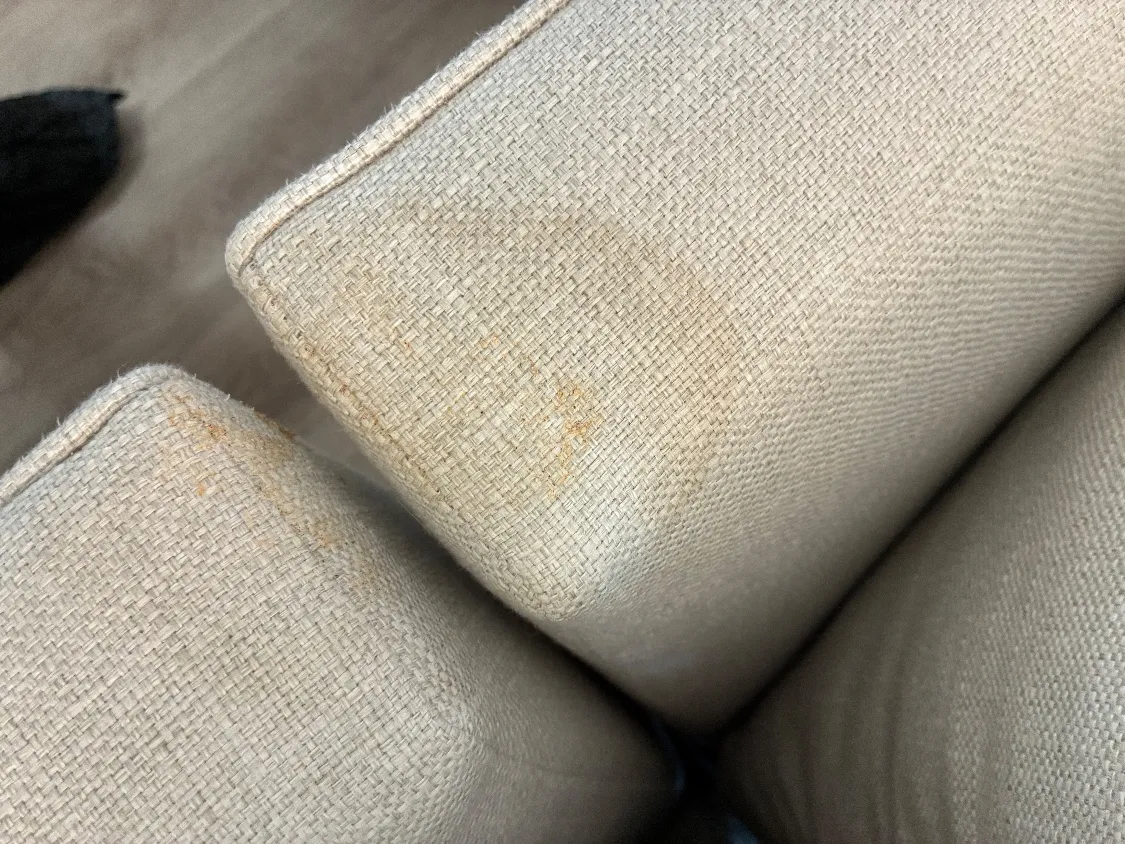
Before
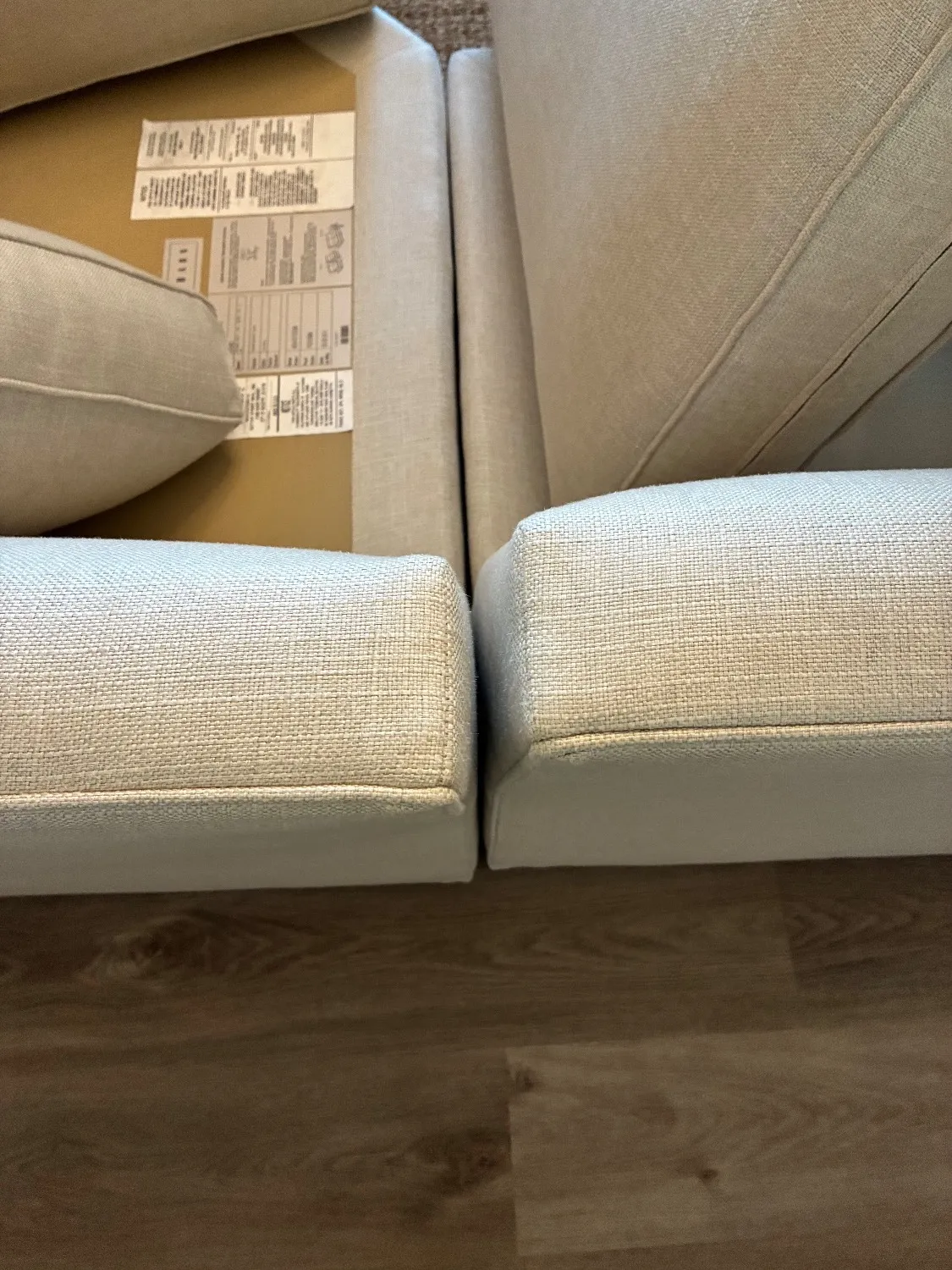
After
Before: Orange-brown speckled spotting along the front edges and corners of two light beige seat cushions.
After: The cushion fronts photographed after cleaning, with no orange-brown spotting visible.
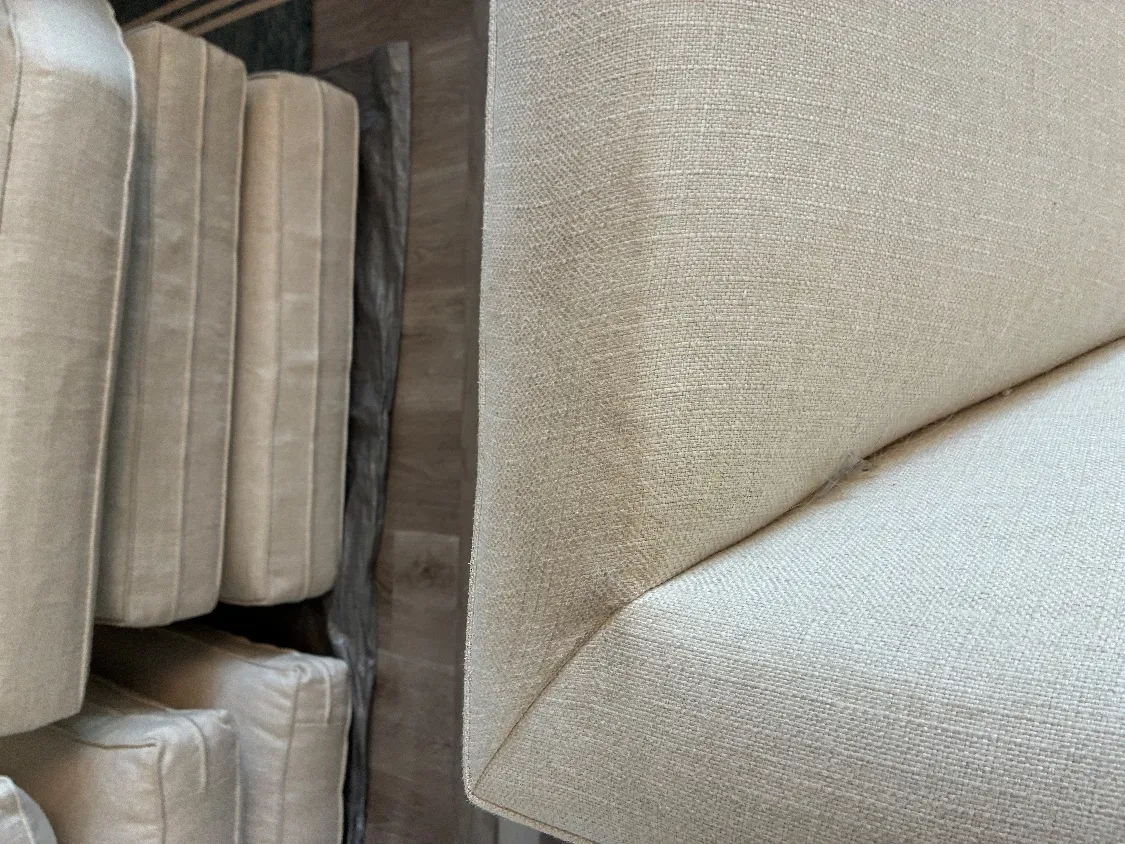
Before
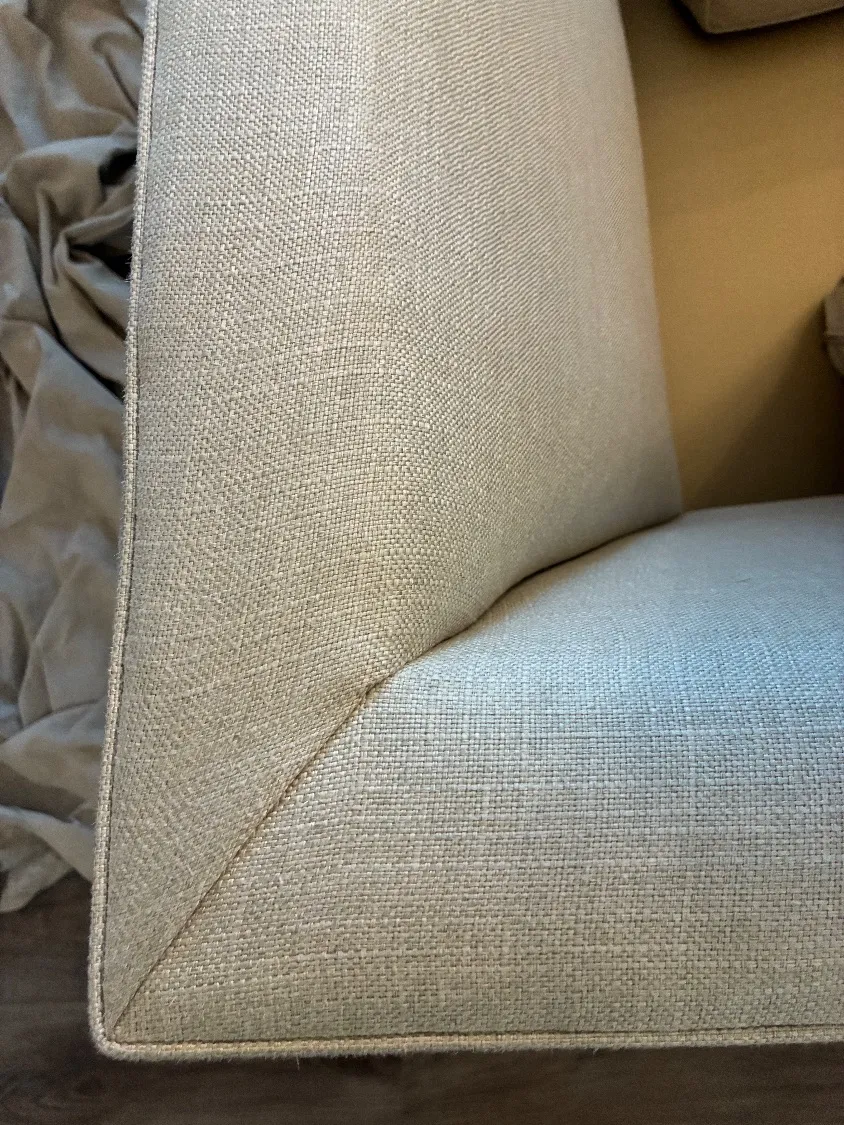
After
Before: A darker, uneven shaded area on the inner arm, just above the seam where the arm meets the seat.
After: The arm-and-seat corner photographed after cleaning, with a lighter, more even appearance. Lighting differs between the two photos, which affects how the fabric color appears.
What matters in these examples is not a universal stain-removal promise. They show why the condition of an actual piece of furniture is more useful than a generic claim like “all stains removed.” The appropriate method and the achievable result depend on the material and the mark.
We have not independently established what caused the spotting or the darker shading, so we do not identify either as a particular beverage, food, or dye. Results vary by fabric, stain, and any previous treatments.
5. Why Does a Brown or Yellow Stain Appear After Couch Cleaning?
A stain that appears—or becomes more noticeable—after a couch dries can be frustrating. But there is no single explanation for every brown or yellow mark.
Possible contributors include:
- Soil or residue movement: Moisture can mobilize material within upholstery or cushion components, changing what becomes visible near the surface.
- Cleaning-product residue: Some products may leave residue that affects appearance or attracts additional soil.
- Browning or other discoloration: Certain materials may develop color changes associated with moisture or cleaning chemistry.
- Uneven wetting and drying: A treated area can look different from adjacent fabric even when the original spot has partly improved.
- Existing dye or fiber changes: Cleaning may expose a permanent difference that was already present.
These are possible mechanisms, not a remote diagnosis. The right response depends on the material and previous treatments.
Avoid repeatedly soaking the area with new solutions. More moisture is not necessarily the solution and may add risk.
For further guidance, see our guide to professional vs. DIY couch cleaning.
6. Real Example: Unexpected Results After DIY Upholstery Cleaning
A homeowner reported using Oxi and baking soda while attempting to clean upholstery. Photographs associated with the treatment show uneven coloration and visibly different appearances.
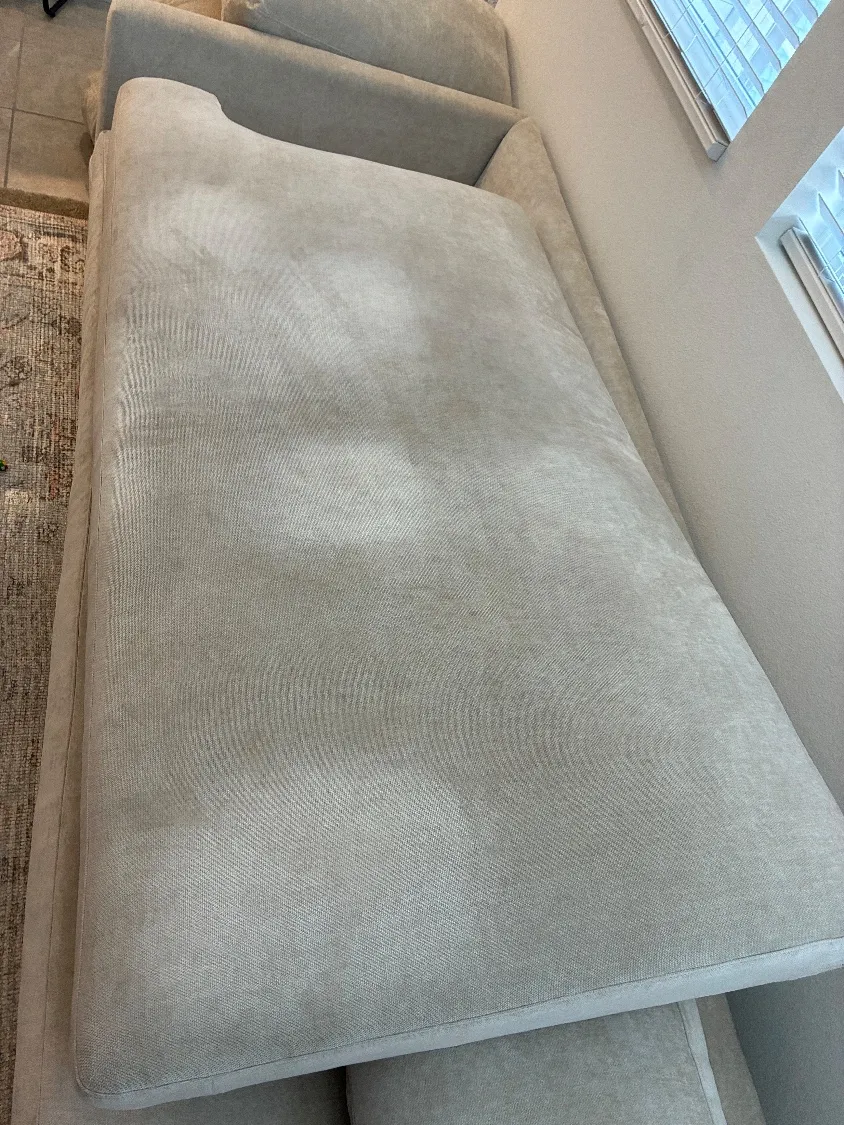
Widespread darker discoloration
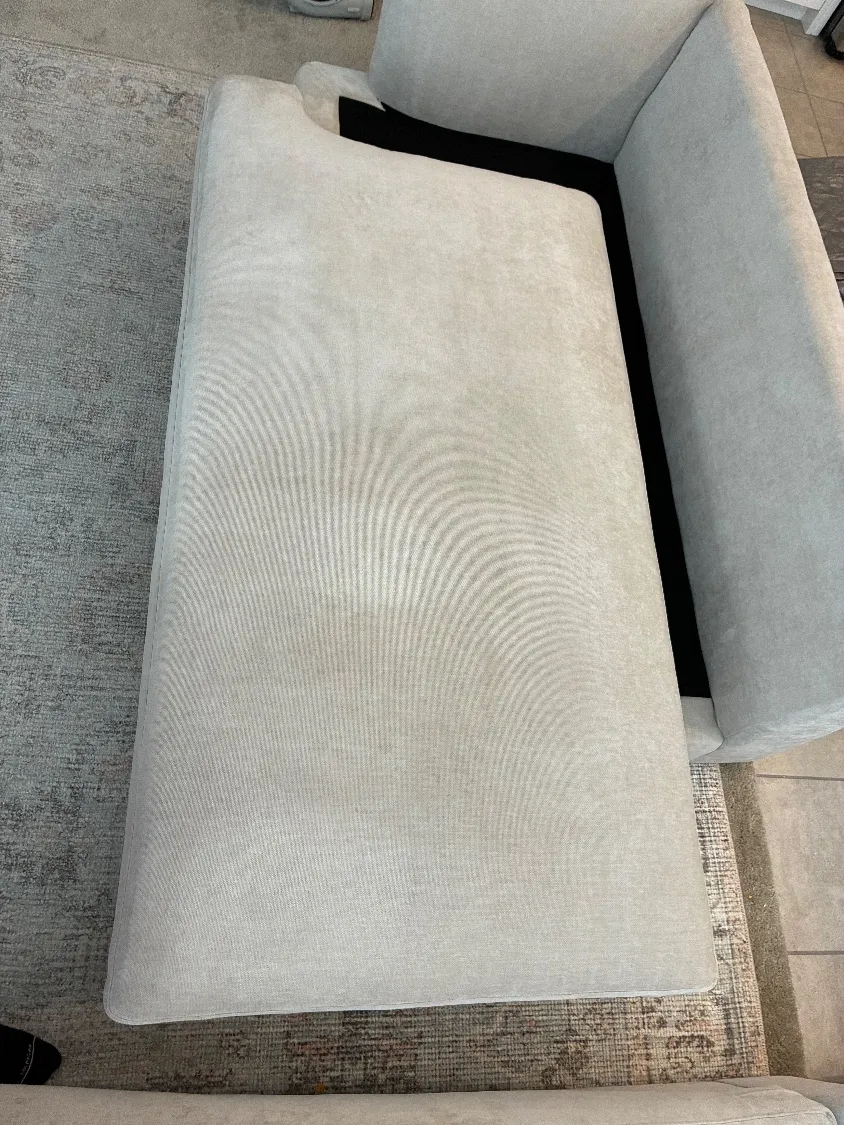
Lighter appearance with residual discoloration
Image 1: Widespread darker, uneven discoloration across a large cushion.
Image 2: A lighter-looking cushion with residual visible variations.
This example supports an important lesson: a visible upholstery mark may not be something that stronger cleaning can fix. When unexpected rings, fading, or uneven areas develop, identifying the fabric and history of treatment is more valuable than adding another product at random.
7. What Should You Do Immediately After a Spill?
Not every spill requires a professional appointment. If the furniture manufacturer permits the intended care and the stain is small, careful early action may help.
- Stop the spill from spreading. Carefully lift loose material without driving it farther into the upholstery.
- Check the furniture instructions. Read the care code and any manufacturer-specific guidance before applying a liquid cleaner.
- Blot rather than aggressively rub. A clean, absorbent white cloth can help pick up excess liquid, where appropriate for the fabric.
- Avoid mixing products. Do not combine cleaning chemicals or automatically apply baking soda, vinegar, peroxide, or laundry products.
- Stop if you notice dye transfer or an unexpected appearance change. Further treatment may increase the risk.
- Explain the treatment history when requesting a quote. A clear photo plus the products already applied helps with a responsible preliminary assessment.
Important: This is general guidance, not a recipe for all fabrics. If the material is solvent-only, vacuum-only, delicate, or unidentified, do not assume a water-based DIY treatment is permitted.
8. What Does Professional Upholstery Stain Treatment Involve?
A stain-focused appointment is more than spraying a spot and extracting it. The actual procedure varies with upholstery and the risks identified.
Inspecting the material and existing condition
At Mango Spotless, we begin by evaluating the upholstery, visible marks, construction, and any reported cleaning history. We look for reasons to limit or decline a treatment where the fabric or its condition makes cleaning unsuitable.
Choosing an appropriate process
For compatible materials, a cleaning process may involve dry soil removal, targeted spot treatment, carefully selected cleaning solutions, and controlled extraction. Other fabrics may require a different method or professional advice beyond the services we offer.
Managing moisture and evaluating the result
Unnecessary saturation creates avoidable drying challenges. When moisture is used, its application and recovery should be controlled, and the furniture should be allowed to dry adequately. Drying time varies by fabric, construction, ventilation, and indoor conditions; we do not promise one fixed drying time for every couch.
Explaining remaining marks
Some residual marks may be due to contamination that did not respond fully. Others may involve damage or discoloration that cleaning cannot undo. A responsible technician should communicate limitations without promising a flawless outcome.
The ANSI/IICRC S300 professional upholstery cleaning standard covers principles such as fiber and construction considerations, inspections, and cleaning methods. See IICRC’s S300 standard overview.
Learn more about Mango Spotless furniture cleaning and our cleaning process.
9. When Is a Couch Stain Probably Permanent?
A stain may be difficult or impossible to correct through cleaning when the visible difference is no longer removable soil.
Examples include fabric that has lost dye, an area altered by bleaching, faded upholstery, worn pile, damaged fibers, or some old color-bearing stains that have become fixed in the material.
A patch can also look darker or lighter because the surrounding fabric is dirty, the pile lies differently, or the underlying material affects its appearance. Photographs alone cannot reliably separate these possibilities.
Professional cleaning does not re-dye upholstery or reconstruct damaged fibers. When cleaning cannot deliver the desired appearance, restoration, specialist textile treatment, reupholstery, or acceptance of the remaining mark may be the realistic alternatives, depending on the piece.
If the furniture is valuable, do not risk an aggressive treatment merely because the mark is distracting.
10. Is Professional Couch Stain Removal Worth the Cost?
A small fresh spill on a compatible fabric may be manageable with appropriate home care. For an extensively soiled sectional, a stubborn mark, or furniture already affected by unsuccessful DIY treatment, professional assessment may offer better value than further experimentation.
There is no universal price for removing a stain from a couch. Furniture size, number of pieces, material, condition, and necessary work affect the quote. Professional upholstery cleaning is not always priced as a single isolated spot treatment.
Minimum service appointment: $149.
That is Mango Spotless’s minimum service appointment charge, not a promise that every couch or stain-removal job costs $149. See our San Diego upholstery cleaning cost guide for additional context.
For an initial assessment, send photos showing the entire furniture piece and a close-up of the stain, along with your ZIP code and any previous products used. A photo-based quote is a starting point; final treatment suitability is determined by inspection.
11. Professional Couch Cleaning in San Diego and North County
Mango Spotless provides on-site upholstery and furniture cleaning for homes in San Diego and North County. We focus on selecting a suitable process for the actual furniture, whether the issue is ordinary contact soil, visible spotting, or a couch whose appearance changed after an earlier cleaning attempt.
Our service areas include San Diego, La Jolla, Carmel Valley, Del Mar, Encinitas, Carlsbad, Mira Mesa, and other communities in North County San Diego.
The right cleaning decision comes from the condition and material of the furniture, not simply where the home is located.
12. Frequently Asked Questions
Can professional couch cleaning remove old stains?
Sometimes. Old marks can improve if the material causing the stain is still removable and the upholstery can safely tolerate a suitable treatment. Stains that involve permanent dye or fiber changes may remain.
Can a professional remove coffee stains from upholstery?
Coffee marks can sometimes be reduced or removed, depending on the fabric, the stain’s age, and previous treatments. No result can be guaranteed from the stain type alone.
Can professional cleaning remove wine stains from a sofa?
Some wine marks respond to treatment, while others leave persistent discoloration. Dye stability, fabric type, and treatment history determine the options.
Can body-oil stains come out of couch armrests?
Built-up oils and contact soil can often improve on compatible upholstery. Permanent wear, fading, or damaged fibers may continue to affect the appearance.
Why did my couch stain get darker after cleaning?
Possible reasons include residue movement, uneven moisture, browning, or other fabric and dye reactions. The cause cannot be reliably established from the color alone. Avoid repeating untested wet treatments.
Does baking soda remove couch stains?
It is not a universal upholstery stain remover. Whether any product is suitable depends on the furniture manufacturer’s guidance and the actual stain. Avoid experimenting on unknown or sensitive fabrics.
Is it safe to use OxiClean on every sofa?
No. Product instructions and upholstery compatibility vary. Follow both the specific cleaner’s directions and the furniture maker’s care information. Do not assume a laundry product is suitable for every couch.
Can a professional fix bleach spots or faded upholstery?
Cleaning cannot normally restore dye that has been removed or permanently altered. Specialist restoration may be a separate service, but conventional cleaning does not reverse fading or fiber damage.
How long does professional couch cleaning take to dry?
Drying varies by the fabric, furniture construction, cleaning method, ventilation, humidity, and how much moisture remains. Follow the technician’s instructions and avoid use until adequately dry.
How much does Mango Spotless charge for couch stain removal?
Minimum service appointment: $149. That is the minimum appointment charge, not a fixed stain-removal price or guarantee of removal. Request an item-specific quote using photos and your ZIP code.
Final Answer: Is Your Couch Stain Removable?
The most useful question isn’t simply “Can a professional get this out?” It’s “Is this removable material on the fabric, or has the fabric itself changed?”
Many couches benefit visibly from professional cleaning. Others have marks that can only be reduced, or permanent differences that cleaning cannot undo. An inspection-first approach helps protect the furniture and avoids unrealistic promises.
If you have a stained sofa, sectional, loveseat, or upholstered chair in San Diego or North County, share photographs and describe what happened. We’ll review the information, explain the next step, and provide an appropriate quote when the work is within our service scope.
Minimum service appointment: $149.