
Your couch is one of the most frequently used pieces of furniture in your home. Over time, upholstery can collect dust, body oils, food spills, pet hair, and everyday soil. When your sofa starts looking dirty, the first question is often simple: Should you clean your couch yourself, or hire a professional upholstery cleaning company?
For homeowners in San Diego and North County, both options have their place. Regular vacuuming and appropriate spot care can help maintain a couch between deep cleanings. But when upholstery becomes heavily soiled, develops stubborn stains, or requires special care, professional cleaning may be the better choice.
The important question isn’t just which option costs less. It’s which method is appropriate for your furniture, how much cleaning is necessary, and what risks are involved.
In this guide, we’ll compare DIY couch cleaning and professional upholstery cleaning, explain common fabric care codes, examine genuine customer photographs, and help you decide when to call a professional.
Quick Answer: Is Professional Couch Cleaning Better Than DIY?
Professional couch cleaning is often the better choice for extensive soiling, difficult stains, delicate fabrics, and large upholstered furniture. DIY maintenance can be appropriate for routine vacuuming and minor spots when the furniture manufacturer’s care instructions permit it.
A portable upholstery cleaner can be useful, but owning or renting a machine doesn’t guarantee that the cleaning solution, moisture level, or extraction method is appropriate for your couch.
Professional service also has limitations. Some stains, discoloration, wear, dye changes, and previous cleaning damage may be permanent. The best decision depends on the furniture’s fabric, construction, condition, and cleaning history.
Professional Couch Cleaning vs. DIY: Side-by-Side Comparison
| Factor | DIY Couch Cleaning | Professional Couch Cleaning |
|---|---|---|
| Initial cost | Cleaning supplies, equipment purchase, or rental | Service appointment and an item-specific quote |
| Equipment | Household vacuum, portable extractor, or rental machine | Equipment and tools selected for the cleaning method |
| Fabric assessment | Homeowner interprets manufacturer instructions | Technician evaluates fabric, condition, and cleaning risks |
| Spot treatment | Depends on homeowner knowledge and product selection | Treatment selected based on stain and fabric |
| Larger furniture | Can require considerable time and repeated equipment use | Cleaning scope assessed for the entire piece |
| Moisture control | Depends on technique and machine capability | Technician adjusts application and extraction methods |
| Risk | Incorrect products or methods can cause problems | Risks remain, but inspection and appropriate methods help manage them |
| Convenience | Homeowner handles preparation, cleaning, and drying | Service provider performs the cleaning |
| Results | Depend on fabric, soil, products, and technique | Also depend on fabric, soil, previous damage, and method |
Neither option guarantees complete stain removal. For general budgeting, see our upholstery cleaning cost guide in San Diego.
1. What Does DIY Couch Cleaning Actually Involve?
DIY upholstery cleaning can mean several different things. One homeowner may vacuum cushions and remove loose debris. Another may treat a small spill with a manufacturer-approved product. Someone else may rent an extraction machine and attempt to clean the entire sectional. These approaches are not equivalent, and they carry different risks.
Routine Vacuuming and Dry Maintenance
Routine vacuuming is one of the simplest ways to care for upholstered furniture, provided the manufacturer permits it. Using a suitable upholstery attachment can help remove loose dust, crumbs, pet hair, and debris from cushions, seams, and crevices. It is useful maintenance, but does not necessarily remove embedded body oils or stubborn residues.
Spot Cleaning Small Spills
A small, recent spill may be manageable at home. Before using any product, check the furniture manufacturer’s instructions. Some fabrics tolerate appropriate water-based cleaning; others require solvent-based treatment or dry maintenance only. When instructions allow spot treatment, blotting excess liquid with a clean white cloth is generally preferable to aggressive rubbing. Follow the cleaner’s instructions and test compatibility in an inconspicuous area.
Portable or Rental Upholstery Machines
Portable extraction machines apply cleaning liquid and recover some through suction. They can be useful on compatible upholstery, but first consider:
- Is the fabric suitable for water-based extraction?
- Is the cleaning solution compatible with the upholstery?
- How much moisture enters the fabric and cushion?
- Is the machine recovering sufficient moisture and residue?
- Can the furniture dry thoroughly before normal use?
A machine can work correctly while the overall method is inappropriate for the furniture. Care instructions and furniture construction matter more than a machine’s advertised strength.
2. Understanding Upholstery Cleaning Codes Before You Start
Before wet cleaning, locate the upholstery care label and any manufacturer instructions. Common cleaning codes include W, S, W/S, and X.
| Code | General Meaning | Important Limitation |
|---|---|---|
| W | Water-based methods may be permitted | Does not mean covers or the entire couch can be machine-washed |
| S | Solvent-based methods are indicated | Avoid water-based treatments unless the manufacturer says otherwise |
| W/S or S/W | Either type may be permitted | Method still must fit the fabric and construction |
| X | Vacuuming or light brushing only | Avoid liquid cleaning products |
These codes are broad conventions, not a guarantee that every product or technique in a category is safe. W-coded upholstery can still react poorly to concentrated products, forceful brushing, or saturation. Removable cushion covers are not automatically machine washable. When the label is missing or unclear, consult the manufacturer or a qualified upholstery professional instead of experimenting.
Source: Frontgate upholstery care-code guidance.
3. The Risks of DIY Couch Cleaning
DIY problems do not always appear immediately. A couch may look acceptable while damp, then develop visible rings, uneven coloration, residue, or texture changes as it dries.
Incompatible Cleaning Products
A laundry stain remover is not automatically suitable for upholstery. Household and upholstery cleaners differ in application instructions, concentrations, and fiber restrictions. OxiClean publishes product-specific restrictions and emphasizes testing in a hidden area. Never assume a familiar product is safe for every fabric.
Water Rings and Uneven Drying
Visible rings or patterns can occur when moisture, residue, or soil moves within upholstered material. Appearance alone cannot establish a chemical cause. Repeatedly wetting a problem area without identifying the material may worsen the result.
Excessive Moisture
Moisture can reach upholstery backing, padding, or inaccessible seams. The U.S. Environmental Protection Agency advises prompt drying of wet materials, commonly within 24–48 hours, in its moisture and mold-prevention guidance. That is not a drying-time promise for couch cleaning. The practical lesson is to avoid saturation and provide suitable drying conditions.
Aggressive Scrubbing
Heavy brushing can alter the appearance of certain fabrics. Risks depend on fiber, weave, finish, and applied pressure. Continuing to scrub because a stain remains can create more damage.
Permanent Discoloration
Not every visible mark is removable soil. Dye alteration, bleaching, wear, and fiber damage may not be reversible through cleaning. Professional inspection can assess realistic options, but cannot guarantee restoration.
4. Real Example: Upholstery After a DIY Cleaning Attempt
The following original photographs concern a homeowner’s reported DIY upholstery treatment involving Oxi and baking soda.
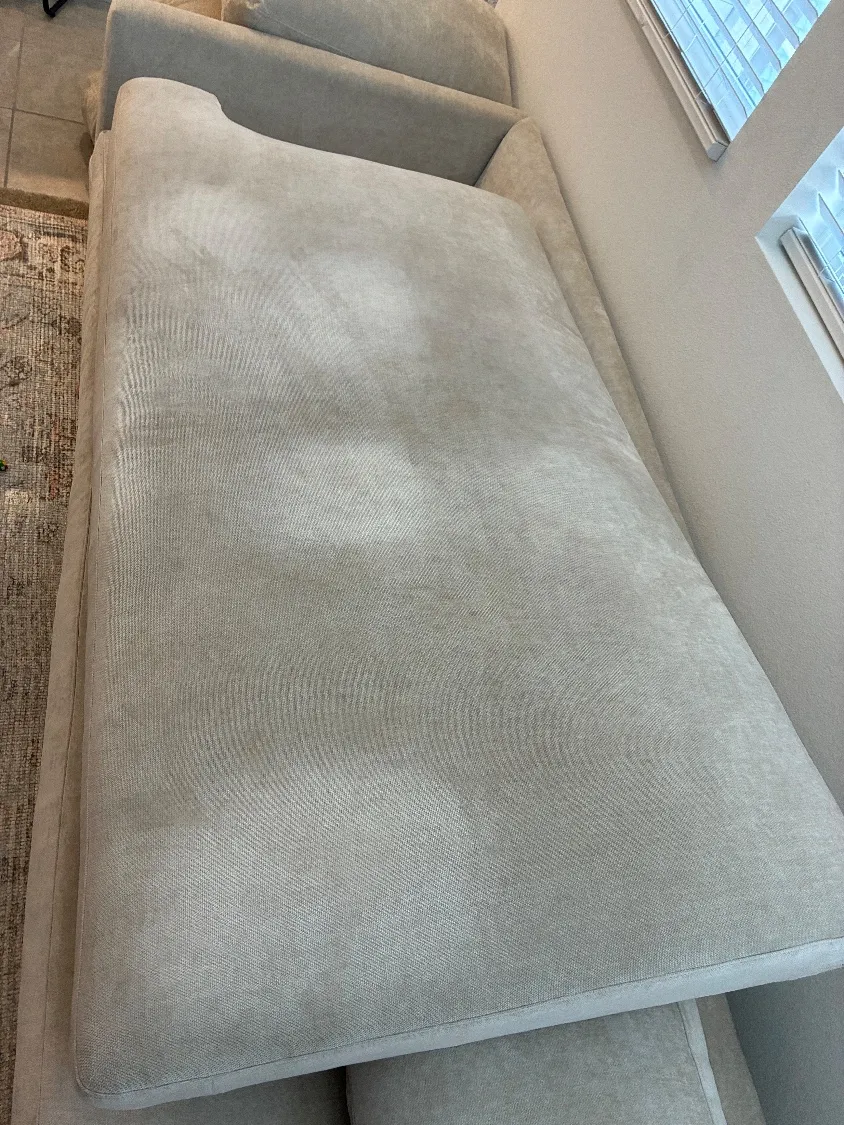
Widespread darker discoloration
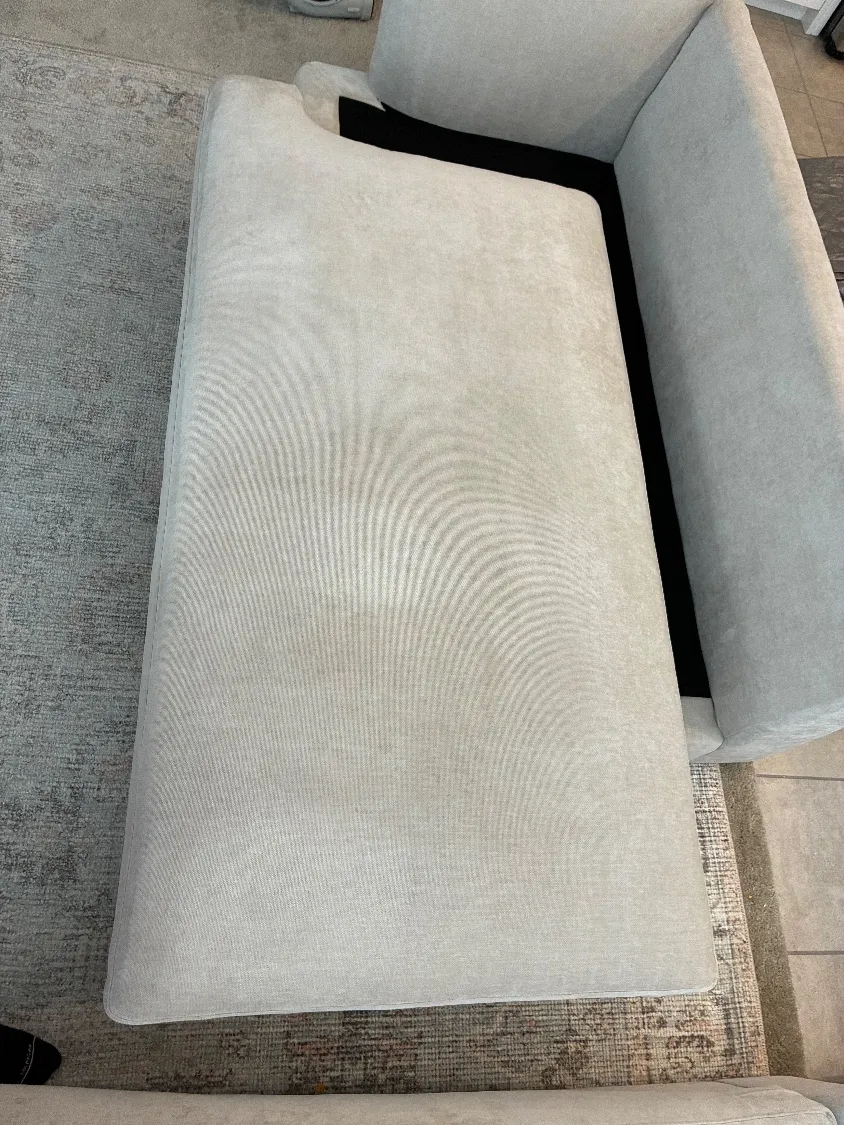
Lighter appearance with residual discoloration
What This Example Teaches
Visible discoloration is not automatically a removable stain. The underlying issue may involve residues, material changes, or previous treatment. When unexpected rings or widespread changes appear, stop experimenting with additional products until the upholstery and its cleaning history can be assessed.
More cleaning solution is not always the answer. A fabric-appropriate assessment may be more useful than repeating an unsuccessful treatment.
5. What Does Professional Couch Cleaning Include?
Professional upholstery cleaning should begin with an assessment, not automatically applying the same solution to every couch. At Mango Spotless, treatment is selected according to the item’s material and condition.
Step 1 — Furniture Inspection
Evaluate visible soil, spots, upholstery material, construction, prior treatments, and cleaning risks. Consider available manufacturer instructions and test where appropriate.
Step 2 — Dry Soil Removal
Where suitable, remove accessible loose debris from cushions, seams, and upholstered surfaces before wet-cleaning stages.
Step 3 — Spot Assessment and Treatment
Evaluate visible spots individually. Select products and methods appropriate to the fabric, recognizing that some marks or discoloration may remain.
Step 4 — Appropriate Cleaning Method
Depending on material and condition, the selected method may involve controlled extraction or a very-low-moisture approach. No one procedure is suitable for every sofa.
Step 5 — Moisture Management and Drying Guidance
Control moisture when it is used, consider fabric and cushion construction, and explain suitable drying conditions and when normal use can resume.
Step 6 — Final Evaluation
Inspect the results and explain any remaining marks or material limitations. Professional cleaning may improve suitable upholstery, but cannot guarantee total stain removal or repair permanent damage.
Learn more about our upholstery cleaning service and our cleaning process.
6. Real Results: Professional Couch Cleaning in Mira Mesa
Professional cleaning can make a visible difference when the fabric and soil respond to the chosen treatment. These genuine Mango Spotless photographs show a chaise section of upholstered furniture cleaned in Mira Mesa, San Diego.
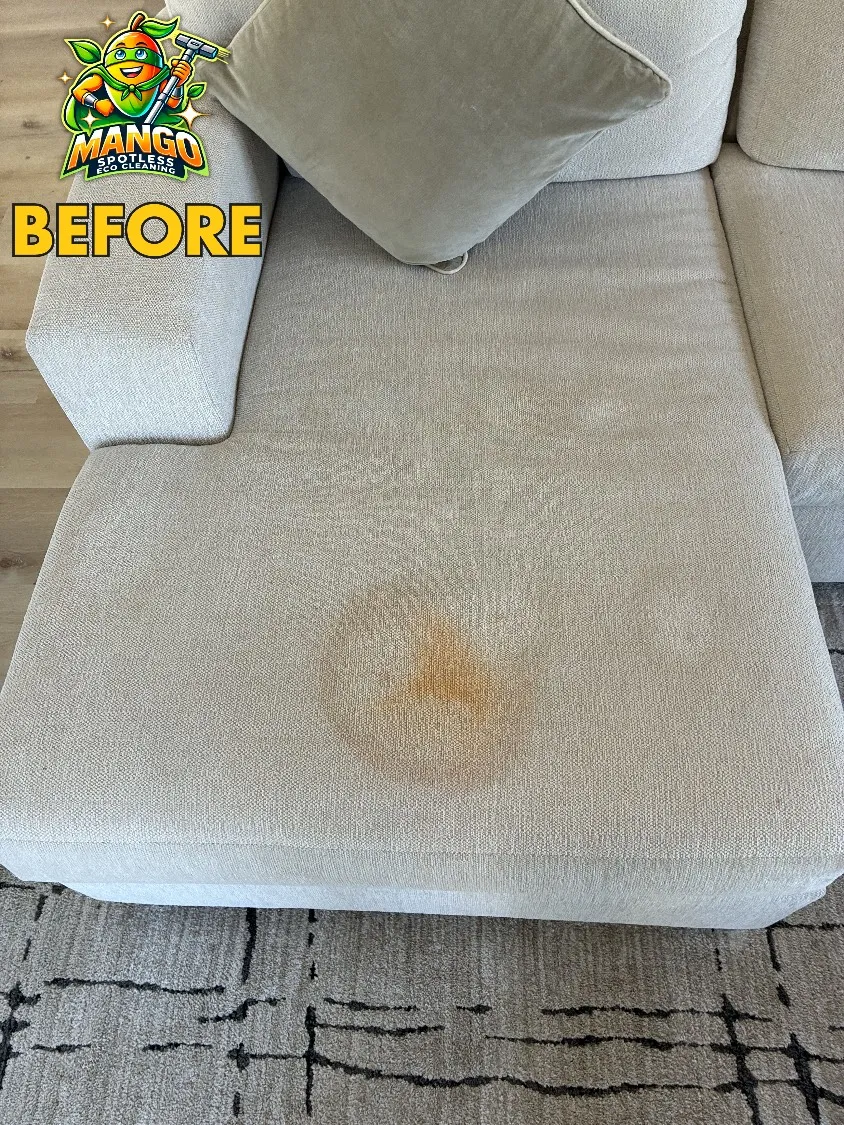
Before
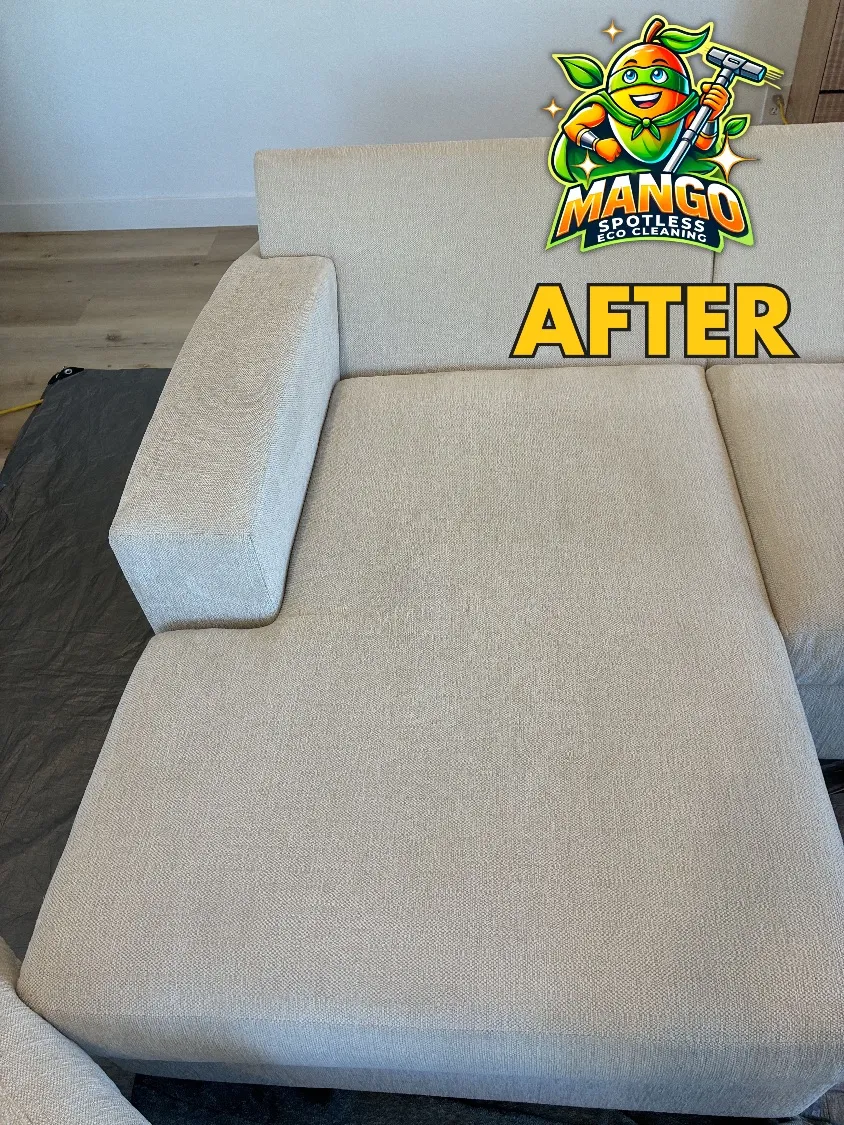
After
Before: A visible orange-brown mark on the chaise seating area.
After: The same general area after professional upholstery cleaning; the original mark is no longer readily apparent in the photo.
Why This Example Matters
These are actual project photographs, not a stock photo or digitally simulated transformation. They show one result—not a guarantee for every stain. What matters is selecting an approach appropriate for the upholstery and evaluating the result. Mango Spotless serves homeowners in Mira Mesa and surrounding communities.
7. DIY vs. Professional Cleaning: Which Option Makes More Financial Sense?
The lowest initial expense isn’t always the best value, but professional cleaning isn’t necessary for every spill or routine maintenance task.
When DIY May Be More Economical
DIY care may make sense when the furniture is generally in good condition, the issue is minor, and the manufacturer permits the planned treatment. Vacuuming requires relatively little equipment. A small fresh spill may be manageable with compatible, carefully applied care. Consider the cost of products, equipment, time, and possible mistakes.
When Professional Cleaning May Offer Better Value
Professional service may be worthwhile for large or heavily soiled furniture, pieces that are expensive to replace, fabric requiring additional precautions, or multiple items during one appointment. Previous unsuccessful cleaning attempts can also make an inspection-first approach particularly useful. Professional service doesn’t eliminate risk, but can provide an informed choice of method.
How Much Does Professional Couch Cleaning Cost in San Diego?
Pricing depends on furniture dimensions, configuration, fabric, condition, and required work. A compact loveseat and a large sectional do not necessarily take the same effort.
Minimum service appointment: $149.
At Mango Spotless, this is the minimum appointment charge, not a fixed price for every couch or sectional. Individual quotes depend on the furniture and cleaning requirements.
For general budgeting examples, read our San Diego upholstery cleaning cost guide. For a personalized estimate, send photos, your ZIP code, and a description of your furniture.
8. When Is DIY Couch Cleaning a Reasonable Choice?
DIY care can be appropriate when the task is limited and manufacturer guidance is clear. For example, routine vacuuming, removal of loose pet hair, or careful blotting of a new spill may be reasonable.
Distinguish routine maintenance from attempting full corrective treatment. If the fabric and product are compatible, limited DIY care may help maintain furniture between professional appointments. Avoid escalating to repeated soaking or strong chemicals just because a mark remains. The mark may require another method—or may not be removable.
9. When Should You Call a Professional Upholstery Cleaner?
Consider a professional assessment when the cleaning requirements are uncertain or the consequences of a mistake could be significant, including:
- Large sectionals or several upholstered pieces
- Significant body-oil buildup or widespread soil
- Persistent spots despite suitable initial care
- Delicate, unfamiliar, or expensive upholstery
- Missing or unclear manufacturer cleaning instructions
- Rings or discoloration following previous treatment
- Furniture previously treated with multiple cleaning products
No rental machine is suitable for every material. A professional should explain the limitations of the proposed cleaning process and decline methods that present unacceptable risks.
10. Considerations for San Diego and North County Homes
Cleaning needs vary more by how a couch is used than by the neighborhood where it is located. A heavily used family-room sectional may collect more visible soil than an occasional guest-room sofa. Households with pets may face hair, spots, and odor concerns. Light-colored upholstery may show marks readily, and textured fabrics may need particular attention.
Mango Spotless provides on-site upholstery and furniture cleaning in San Diego and North County. Explore relevant service-area pages:
Each item is assessed according to its material and condition, not merely its location. Read more about our furniture cleaning service and North County coverage.
11. How to Maintain a Couch Between Professional Cleanings
Vacuum Upholstery Regularly
Use a suitable upholstery attachment and follow the manufacturer’s directions. Address accessible seams and edges where debris accumulates.
Address Spills Promptly
When care instructions permit, carefully remove excess liquid. Avoid aggressive rubbing or untested household mixtures.
Follow Manufacturer Instructions
Keep care information available. If the label is unclear, consult the manufacturer before attempting wet treatment.
Avoid Mixing Cleaning Products
Applying several different products consecutively can cause incompatibility and residue concerns. Never mix chemicals unless the manufacturer specifically directs it.
Allow Adequate Drying
When moisture is used, follow the proper drying guidance and do not use the furniture while damp.
Arrange Professional Cleaning When Needed
No one interval fits every couch. Usage, spills, pets, material, and the manufacturer’s recommendations affect the decision. See How Often Should You Clean a Couch?.
12. Frequently Asked Questions About DIY and Professional Couch Cleaning
Is professional couch cleaning worth it?
It can be worthwhile for extensive soil, difficult spots, delicate upholstery, or unclear cleaning history. Routine vacuuming and minor manufacturer-approved spot care may not require professional service.
Can I clean my couch with baking soda?
Do not assume baking soda suits every upholstery material or problem. Follow manufacturer instructions and avoid experimenting further if discoloration has already appeared.
Is OxiClean safe for couches?
It depends on the exact OxiClean product, fabric, and instructions. The manufacturer publishes fabric restrictions and testing requirements for its products. Follow both the cleaning-product and furniture-maker directions.
Are rental upholstery cleaning machines safe?
They may be suitable for some compatible fabrics when used correctly. They are not appropriate for every upholstery material; unsuitable products, excess moisture, or poor technique can create problems.
Can professional upholstery cleaning remove every stain?
No. Some stains and discoloration cannot be completely removed, particularly when fibers, dyes, or finishes have undergone permanent changes.
Can DIY couch cleaning permanently damage fabric?
Inappropriate methods can cause or contribute to lasting appearance changes on some materials. Photographs alone cannot identify the precise cause of a mark.
How long does a couch take to dry after professional cleaning?
Drying time depends on method, fabric, cushion construction, ventilation, humidity, and residual moisture. Follow the technician’s advice and avoid use until adequately dry.
Is $149 the price to clean a sofa at Mango Spotless?
No. $149 is the minimum service appointment charge, not a guaranteed price for any particular sofa. A quote depends on furniture and cleaning requirements.
Can you clean a large sectional during one appointment?
Large sectionals can be evaluated for service. Configuration, removable cushions, upholstery, condition, and scope determine the process and quote.
Do you provide couch cleaning in North County San Diego?
Yes. Mango Spotless serves San Diego and North County communities, including Carlsbad, Encinitas, Del Mar, and other areas in our service-area directory.
Final Verdict: Professional Couch Cleaning or DIY?
For routine maintenance, appropriate DIY care can be practical and affordable. For extensive soil, uncertain marks, and delicate upholstery, a professional assessment and cleaning may be the better choice.
The safest approach starts with understanding the material and following the manufacturer’s directions. No single machine, product, or process works for every sofa. If unexpected rings or discoloration develop, avoid repeated untested treatment.
At Mango Spotless, our aim is to evaluate furniture, select a suitable method, and discuss realistic results rather than promise an outcome that cannot be guaranteed.
Get a Professional Couch Cleaning Quote in San Diego
Whether you have a sectional, loveseat, upholstered chair, or furniture affected by an unsuccessful DIY attempt, Mango Spotless can review your cleaning needs. Send photos, your ZIP code, and a short description of your furniture, known spots, and previous treatments.
Minimum service appointment: $149.
Serving San Diego and North County San Diego.
Sources and Further Reading
- Frontgate — Upholstery Cleaning & Care Codes: frontgate.com care-code guide (PDF) — general upholstery cleaning code conventions.
- OxiClean — Stain Solutions: oxiclean.com stain solutions — product-specific fabric directions and restrictions; confirm the exact product when citing a restriction.
- U.S. Environmental Protection Agency — Mold Course, Chapter 4: epa.gov Mold Course, Chapter 4 — moisture control and drying guidance for wet materials, not a normal upholstery-cleaning drying guarantee.
- Google Search Central — Creating Helpful, Reliable, People-First Content: developers.google.com helpful-content guidance — editorial guidance, not cleaning chemistry evidence.
Photography: Original Mango Spotless customer/project photographs supplied by the owner. The images alone do not demonstrate chemical causation, a complete DIY treatment timeline, or guaranteed results.