
Whether you’ve already scheduled a professional couch cleaning or you’re considering booking one, you probably have one question: When can everyone sit on the couch again?
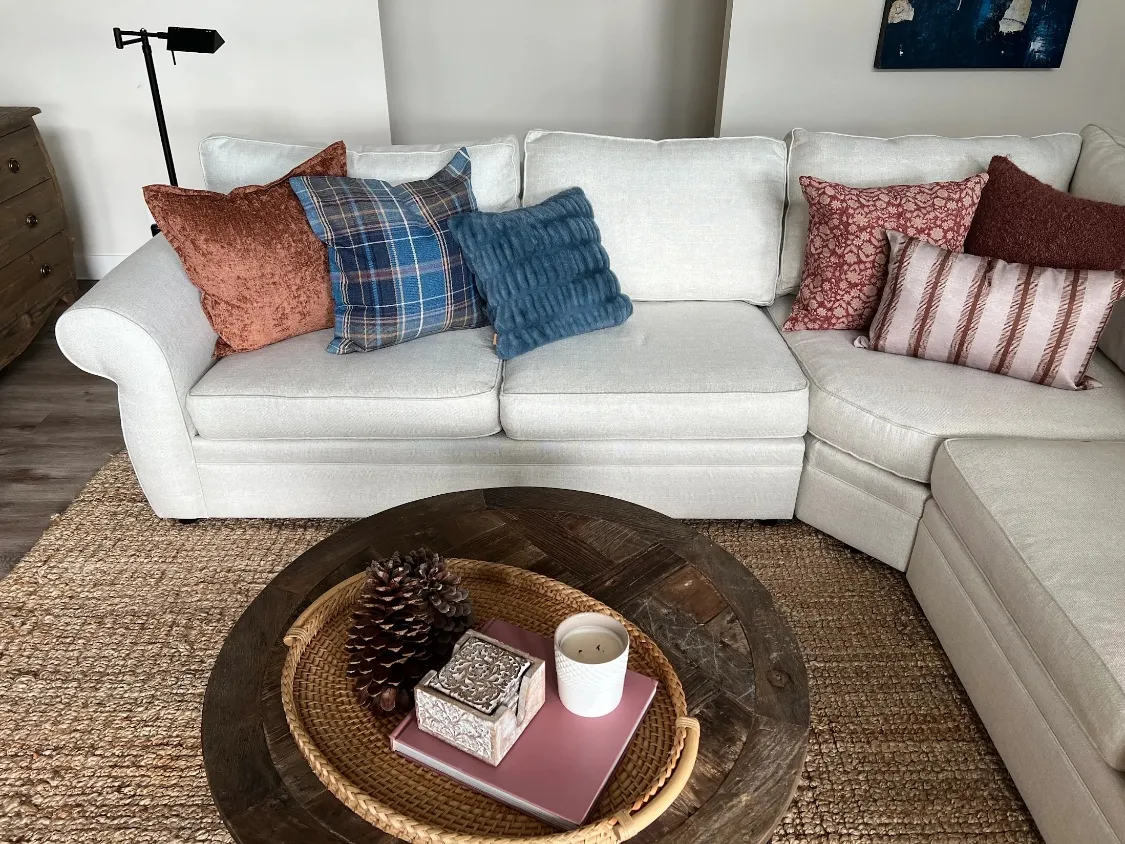
The answer depends on the furniture, the cleaning method and the conditions in your home. At Mango Spotless, most of our upholstery cleaning jobs dry in approximately 2–5 hours. That typical estimate assumes suitable drying conditions, such as good airflow, air conditioning or appropriately positioned fans. Across a broader range of situations, drying takes roughly 2–8 hours, and some couches may take longer depending on the fabric, cushion construction, remaining moisture, ventilation and humidity. These are experience-based planning estimates, not guaranteed drying times for any particular couch.
This guide explains what controls drying time, why some cushions remain damp longer than others, how to improve airflow safely, and how to prepare for a cleaning appointment in San Diego or North County.
Quick Answer: How Long Until You Can Sit on a Professionally Cleaned Couch?
Plan for several hours, and allow extra time if the upholstery or the room dries slowly. With suitable drying conditions, Mango Spotless generally estimates approximately 2–5 hours for most of our jobs, and around 2–8 hours across a wider range of situations. Some couches take longer. Your technician may recommend a different window after inspecting and cleaning your particular furniture.
Do not use the clock as the only test. The sitting surfaces, seams, cushion edges and other cleaned areas should be dry to the touch, without obvious damp patches. A thick cushion can retain moisture below an apparently dry surface, so ask the technician about the piece’s construction and any specific precautions.
If the sofa still feels damp when the estimate has passed, wait longer rather than covering it or sitting on it.
Couch Drying Time: A Practical Comparison
| Situation | What to Expect | What to Do |
|---|---|---|
| Typical Mango Spotless upholstery appointment | Our planning estimate is about 2–5 hours for most jobs with good airflow | Follow the technician’s item-specific drying instructions |
| Slower-drying Mango Spotless job | Our published broader range is roughly 2–8 hours; some circumstances may take longer | Improve safe airflow and do not use the couch while damp |
| Cleaning with a suitable lower-moisture method | May use less liquid, but actual drying time varies | Follow the method-specific instructions, not a universal hour claim |
| Thick cushions, dense construction or less airflow | Drying may be slower, particularly in seams and cushion edges | Leave space for air circulation and check the entire cleaned area |
| Furniture soaked by a leak or flooding | Not comparable to a routine upholstery cleaning | Contact an appropriate water-damage or restoration professional |
The first two ranges describe Mango Spotless’s published experience, not independently measured averages for every fabric or cleaning method.
1. Why Couch Drying Time Varies
Two couches cleaned on the same day may dry at different rates. The most useful variables are the fabric, the layers underneath it, the amount of moisture used and recovered, and the air around the furniture.
Fabric Type and Weave
Different upholstery fabrics and constructions can hold and release moisture differently. Fiber content matters, but so do weave, backing, finishing treatments and the way a cushion is built. A fabric that feels dry at its surface does not automatically tell you what is happening underneath.
Cleaning code matters as well. A manufacturer’s W or W/S care guidance may permit suitable water-based treatment; S generally points to solvent-based methods, while X generally indicates vacuum-only care. These labels are not an instruction to soak furniture. Always follow the actual manufacturer’s directions and the technician’s assessment.
Cushion Filling and Furniture Construction
A thin upholstered dining-chair seat is not constructed like a large sectional cushion. Foam, batting, backing materials, seams and layered upholstery can affect how much moisture remains after cleaning.
Some cushions can be positioned to improve airflow; others should remain in a specific orientation. Ask before removing covers, propping cushions vertically or turning them over.
Cleaning Method and Moisture Recovery
Professional upholstery cleaning does not mean applying the same amount of water to every item. The method should be selected after examining the material, construction, condition and cleaning instructions.
Where a suitable water-based extraction method is used, controlled application and effective recovery of cleaning liquid can help limit remaining moisture. A technician may also make additional extraction passes or use drying equipment when appropriate.
A lower-moisture approach may be selected for compatible upholstery, but lower moisture does not guarantee a particular drying time or make an unsuitable method safe.
Learn about Mango Spotless’s inspection-first cleaning process.
Airflow, Temperature and Humidity
Airflow helps moisture leave a damp surface. Indoor humidity also matters: a room already holding a lot of moisture may dry upholstery more slowly than a well-ventilated, appropriately conditioned room.
In San Diego, coastal and inland homes can have different indoor conditions. However, the weather outside is not a reliable substitute for checking your room’s actual humidity and ventilation. Depending on the conditions, air conditioning, a dehumidifier or controlled ventilation may be more useful than opening every window.
How Much Cleaning the Furniture Needed
Heavy soil, repeated previous cleaning attempts or complicated spots may affect the method chosen and how much treatment is needed. That can influence drying, but it does not mean every stained couch will take longer. The technician should assess the actual item rather than promise an exact time from photographs alone.
2. How Mango Spotless Manages Moisture During Upholstery Cleaning
At Mango Spotless, the priority is to choose a method that suits the furniture, not to force every piece through the same cleaning process.
The appointment begins with a visual and material inspection. We look at the fabric, construction, soil, visible spots, previous treatment and potential risks. When needed, we carry out appropriate testing before choosing cleaning chemistry, temperature, moisture level and method.
For upholstery suitable for extraction, the work may include dry-soil removal, targeted treatment, controlled cleaning and moisture recovery. Dry passes and air movement may be used when appropriate to support drying. For certain materials, a different cleaning approach may be necessary, or an unsafe treatment may need to be declined.
We do not promise that every couch will be completely dry within a fixed number of hours. At the end of the appointment, we can explain the expected drying conditions and the specific guidance for the item cleaned.
For more information, see our professional upholstery cleaning service and furniture cleaning service.
3. Seven Practical Ways to Help Your Couch Dry Safely
After professional cleaning, a few simple steps can support drying without exposing the upholstery to unnecessary risk.
1. Follow the Technician’s Instructions First
The technician has seen the fabric and cleaning method. Follow any specific advice about cushion positioning, ventilation and when the piece can be used.
2. Improve Air Circulation
Where appropriate, use a household fan or the drying equipment recommended by the technician to move air across the cleaned surfaces. Avoid placing equipment so close that it could topple, overheat or damage the upholstery.
3. Keep Indoor Humidity Under Control
Air conditioning or a dehumidifier may help when indoor conditions are humid. Opening windows is useful only when outside conditions are suitable; it is not always the best choice.
4. Leave Cleaned Surfaces Exposed
Avoid draping blankets, throws, waterproof covers or plastic over upholstery that is still damp. Covering the surface can restrict evaporation.
5. Give Cushions Room to Breathe (If Appropriate)
When the technician confirms that cushions may be repositioned, spacing them can expose more surface area to circulating air. Do not remove non-washable covers or force cushions into positions that may distort their shape.
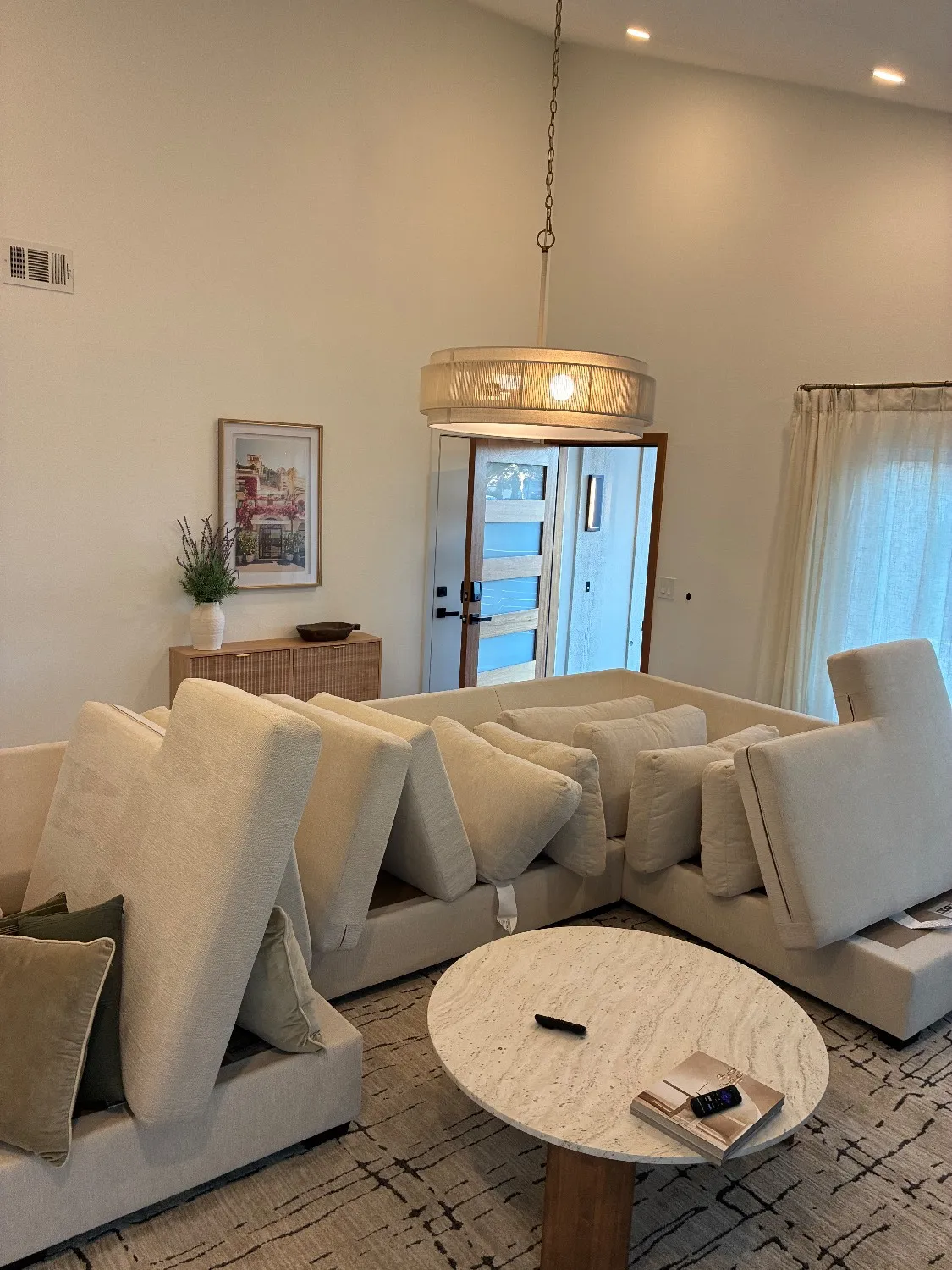
6. Keep People and Pets Off Until Dry
Wait before allowing children, guests or pets to sit or lie on the couch. This can help avoid transfer from clothing or paws and keeps damp cushions from being compressed while drying.
7. Recheck Seams and Cushion Edges
Some areas may dry more slowly than broad flat seating surfaces. Do not judge the entire couch only by the driest-looking section.
Avoid improvised high heat. Do not aim a hair dryer, heat gun or space heater directly at the fabric to force rapid drying; unsuitable heat can create safety or material-damage risks.
4. Can You Sit on a Couch While It Is Still Damp?
We recommend waiting until the cleaned upholstery is dry and following the technician’s instructions before resuming normal use.
Sitting on damp fabric can compress damp cushioning and transfer soil or color from clothing. Using the furniture prematurely may also make it harder to tell whether an area has actually finished drying.
Do not assume a couch is ready simply because a timer has reached the low end of an estimate. Check the whole cleaned area and ask for guidance if any section still seems damp.
If you need the sofa for guests or daily family use, schedule cleaning for a time when it can remain undisturbed for the rest of the day, with additional flexibility if conditions are slower than expected.
5. Does a Low-Moisture Upholstery Cleaning Method Dry Faster?
Potentially, but there is no universal drying-time promise. Using less liquid may reduce the amount that needs to evaporate, while actual drying still depends on what was applied, what was recovered, the fabric and the room.
More importantly, the safest appropriate method is not always the one advertising the fastest drying time. A suitable cleaning plan balances the upholstery’s care requirements, the soil being addressed and the potential for damage.
A couch with uncertain fiber content, dye stability or construction may need additional assessment before any wet method is used.
6. What If Your Couch Still Feels Wet After Eight Hours?
Eight hours is the upper end of Mango Spotless’s published broad planning range, not an automatic deadline that makes every damp couch abnormal. Some combinations of upholstery, cushion construction and room conditions may take longer.
First, check whether the remaining moisture is limited to thicker areas, seams or one cushion. If it is safe for the fabric and equipment, increase room airflow or reduce indoor humidity. Do not soak the fabric again, add more cleaning products or apply concentrated heat.
If the upholstery remains unusually wet, develops a new odor, shows unexpected rings or discoloration, or you are unsure whether the inner cushion is drying, contact the cleaning provider for item-specific advice. Explain how much time has passed, what areas remain damp and what drying measures you have used.
If the furniture was saturated by flooding, a plumbing leak or another water-damage event, that is not ordinary post-cleaning dampness. Water-damaged upholstered furniture may require professional restoration assessment.
The U.S. Environmental Protection Agency’s water-damage guidance recommends prompt moisture removal and says completely drying water-damaged upholstered furniture within 48 hours may be difficult. That guidance is for water damage, not a normal anticipated dry-time window after routine upholstery cleaning.
7. How Should You Plan a Professional Couch Cleaning Appointment?
For a busy household, it is helpful to think about drying before the technician arrives.
If you have an important event, overnight guests, or limited alternative seating, allow enough time for the furniture to dry completely and build in a buffer. For a frequently used family sectional, a morning appointment may provide more of the day for drying than a late-evening appointment, if scheduling and conditions allow.
Let the cleaner know about previous DIY treatments, older water rings, fragile fabrics, loose cushion covers or any previous drying concerns. A clear photograph and the furniture’s care label can help with the initial discussion, although an onsite inspection may still be needed.
You can request a personalized quote through our online quote form. Minimum service appointment: $149. This is the minimum appointment charge, not a fixed price for cleaning a particular sofa or sectional.
8. Real Mango Spotless Project: Couch Cleaning in Bay Park, San Diego
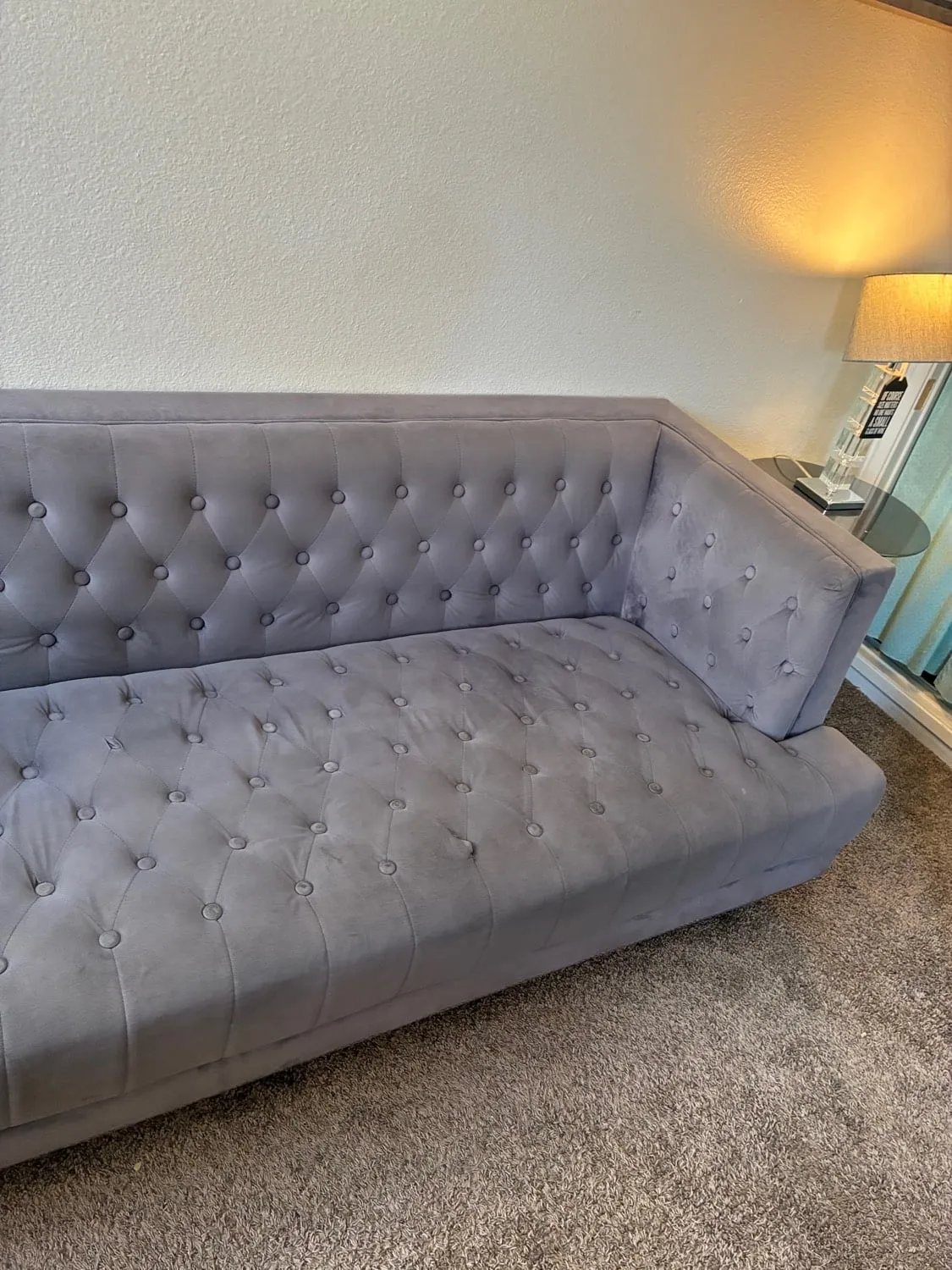
Before
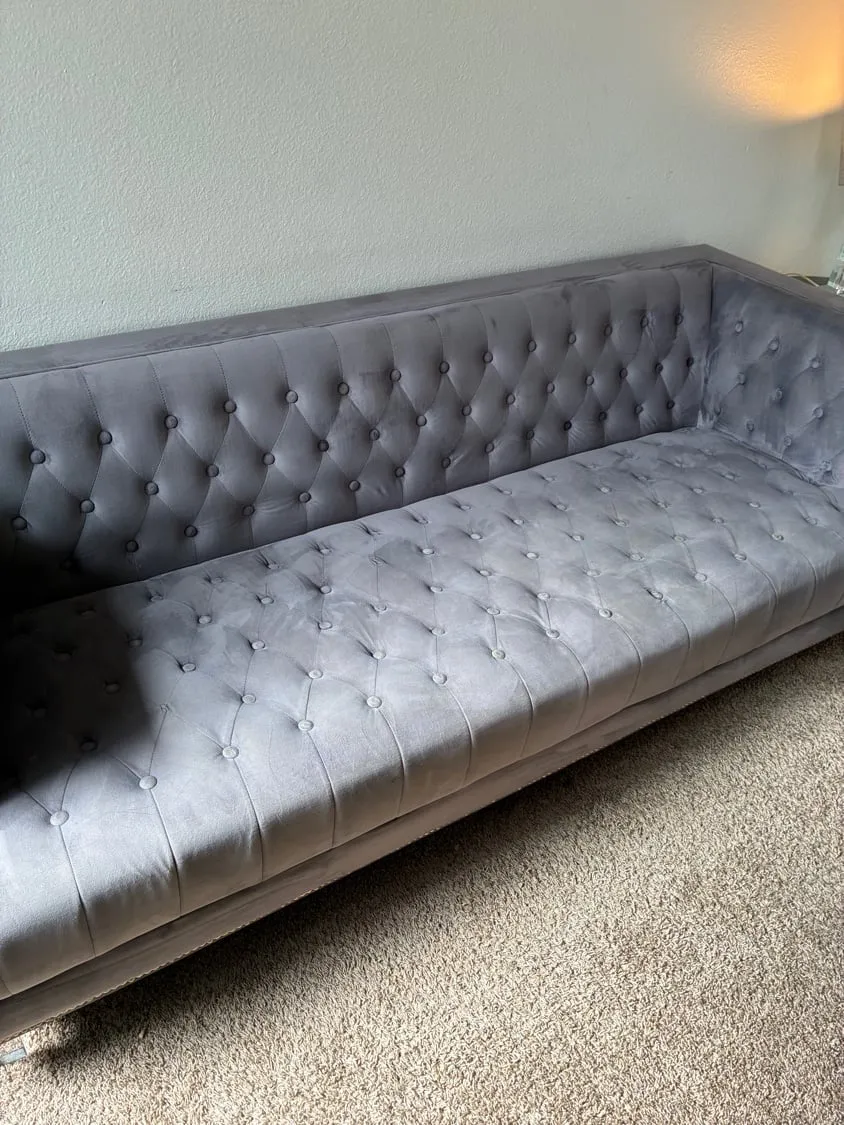
After (approximately 90% dry)
The published Mango Spotless project from Bay Park shows a low-pile synthetic and cotton-blend couch photographed before cleaning and again afterward when the upholstery was reported to be approximately 90% dry.
That distinction matters. A couch can already look noticeably cleaner before the drying process is finished. The appearance of the fabric in a photograph does not prove that all surface and interior moisture has evaporated.
For more genuine project photography, visit our before-and-after gallery.
9. Couch Drying Time in San Diego and North County Homes
A house near the coast and a house farther inland may feel different, but location by itself does not determine upholstery drying time. The fabric, room temperature, ventilation and indoor humidity are what matter for the furniture being cleaned.
Mango Spotless provides professional upholstery cleaning across San Diego and North County, including San Diego, La Jolla, Carmel Valley, Del Mar, Encinitas, Carlsbad and surrounding communities.
Whether the job is a compact loveseat or a large sectional, the best drying estimate is the one based on the furniture and the conditions observed during the appointment.
10. Frequently Asked Questions About Couch Drying Time
How long does a professionally cleaned couch usually take to dry?
Most of our upholstery cleaning jobs dry in approximately 2–5 hours with good airflow, air conditioning or appropriately positioned fans, and roughly 2–8 hours across a broader range of situations. Some couches take longer. These are planning estimates, not guarantees. Fabric, cushion construction, cleaning method, remaining moisture, ventilation and indoor humidity can all change the result.
Can I sit on my couch two hours after cleaning?
Only if the cleaned areas are actually dry and the technician has said the furniture is ready. Two hours is not a universal safe-use threshold.
Can a professionally cleaned couch take overnight to dry?
Yes. Some furniture and room conditions may require longer than the usual planning estimate. If drying seems unusually slow, contact your cleaner for advice rather than assuming more cleaning chemicals will help.
Does using a fan make upholstery dry faster?
Air movement can help evaporation when used appropriately. Follow the cleaner’s advice about fan placement and cushion positioning, and avoid unsafe concentrated heat.
Should I open the windows after couch cleaning?
Only when the outside conditions are suitable. In a humid environment, a conditioned room or dehumidifier may be preferable. The objective is appropriate airflow and humidity control, not simply opening windows.
Will a sectional take longer to dry than a small sofa?
Not necessarily on every job. The number of cushions, their thickness, fabric construction, treatment method and room airflow are more useful than overall size alone for judging individual drying times.
Can I put the cushion covers in a dryer to speed things up?
Do not machine-dry upholstery covers unless the furniture manufacturer’s care instructions specifically permit it. Removable does not mean machine washable or dryer safe.
Why does my couch feel dry on top but damp at the seams?
Seams, edges and thicker cushion sections may dry differently from broad exposed surfaces. Surface touch alone may not reveal moisture deeper in the cushion. Follow the technician’s guidance and wait for the whole cleaned area to dry.
What if the couch develops a musty smell after cleaning?
Do not cover or continue using damp upholstery. Improve safe drying conditions and contact the cleaning provider promptly, especially if unusual moisture persists. An odor can have multiple causes; it should not be diagnosed as mold from smell alone.
11. The Bottom Line: Plan for Drying, Not Just Cleaning
A professional couch cleaning is not finished from the homeowner’s perspective until the furniture is ready to use again.
Most Mango Spotless upholstery jobs are estimated to dry in about 2–5 hours under suitable drying conditions, with a broader planning range of roughly 2–8 hours. Your particular couch may dry sooner or later depending on the fabric, cushions, cleaning method and indoor conditions. The technician’s instructions and the actual condition of the furniture take priority over any general estimate.
If you want professional upholstery cleaning in San Diego or North County, send us clear photos of your couch or sectional, your ZIP code and a short description of any stains or previous cleaning attempts. We’ll review the job and provide a personalized quote.
Minimum service appointment: $149.